













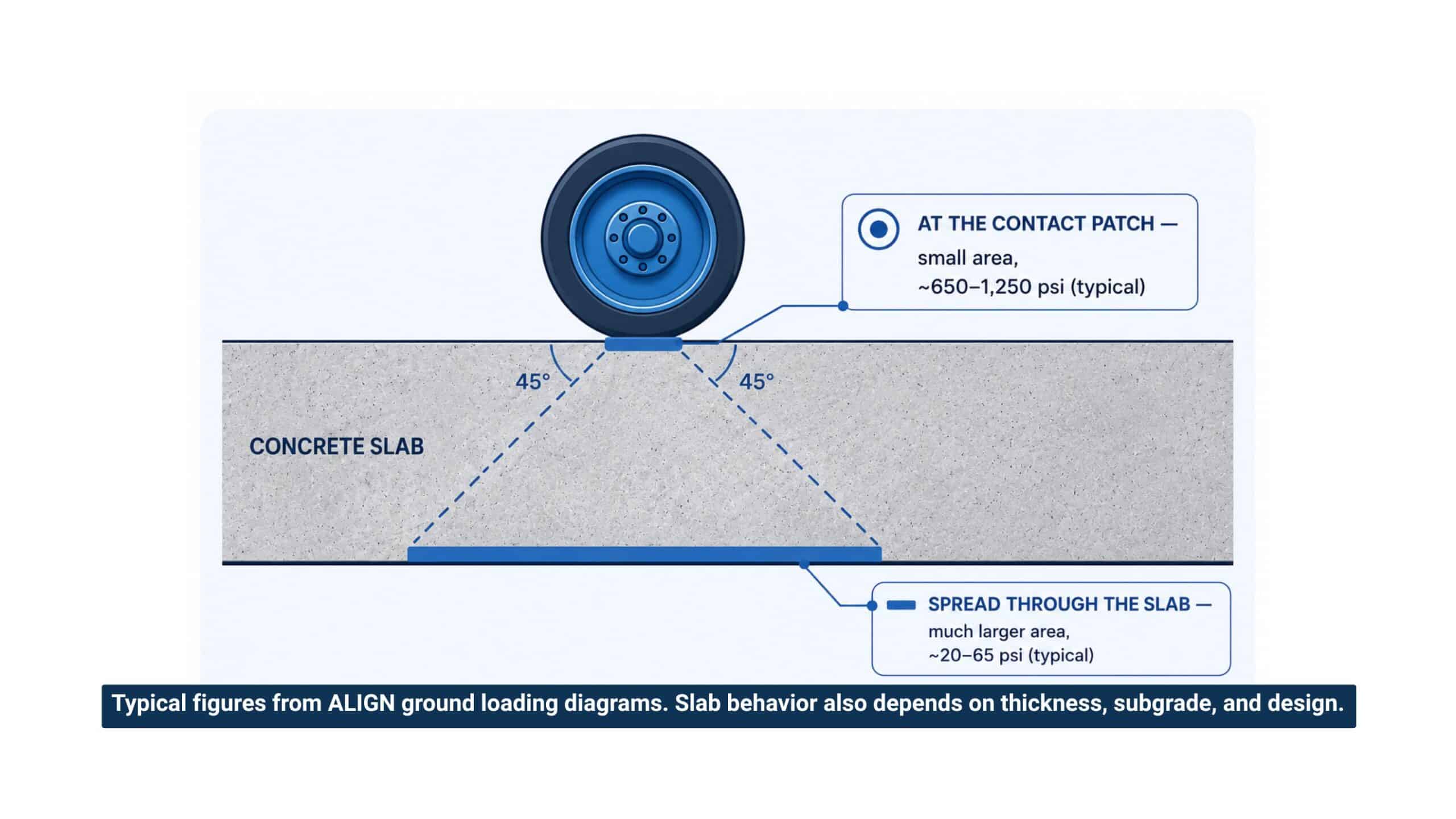
What Is Floor Loading?
Floor loading is a structural engineering rating that describes how much total weight a section of floor can safely support when that weight is distributed evenly across the area. It’s measured in pounds per square foot (PSF) and it’s one of the first things a structural engineer establishes when a building is designed.
For example, a floor rated for 250 PSF (common in industrial environments) can carry roughly 25,000 pounds spread evenly across a 10-foot by 10-foot section. That rating reflects how your specific floor was designed and built, and what supports it. Those details are unique to your building and are set well before any equipment moves in.
Floor loading matters because it’s the baseline your facility was built to. It tells you, in general terms, how much your floor can carry across a given area. That number is essential for planning layouts, storage, and equipment placement.
What Floor Loading Doesn't Tell You...
A floor loading rating describes an average across a broad area. It doesn’t describe what’s happening at any single point on that floor. In practice, very little weight in a facility is ever spread out perfectly evenly. Equipment sits on wheels, feet, or legs, which means the actual load is concentrated at a handful of small contact points rather than smeared across the whole footprint.
That’s where a second measurement comes in: spot pressure.
What Is Spot Pressure?
Spot pressure is how hard a piece of equipment presses on the floor at each individual contact point: its wheels, casters, or feet. It depends on two things, the force pushing down at that point and the size of the contact patch that force is pressing through. It’s measured in pounds per square inch (PSI), where the square inch is a much smaller unit of area than the square foot used for floor loading.
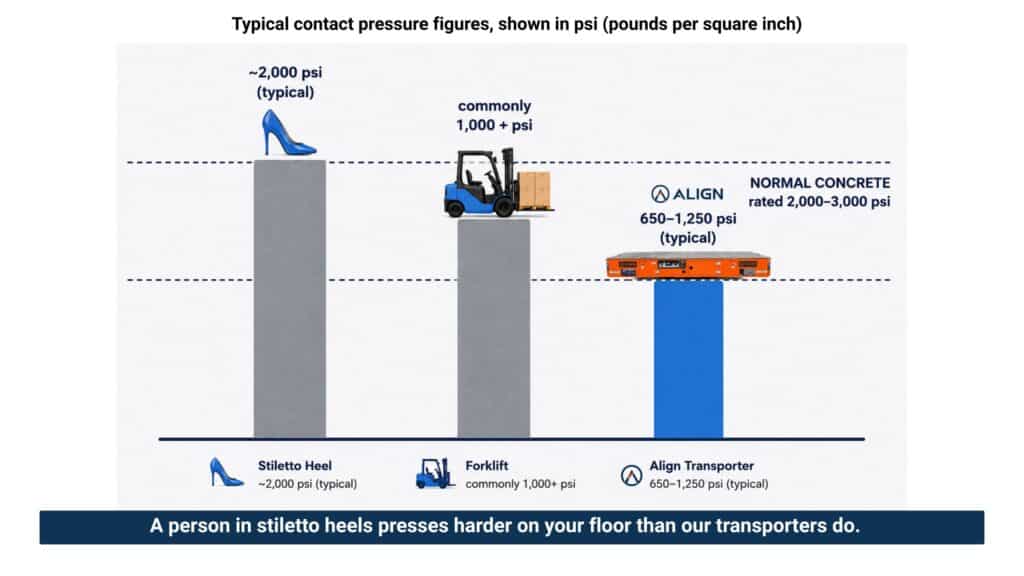
Because the contact area is small, spot pressure numbers can look large, often 750 to 1,000 PSI or more for common material handling equipment like forklifts. This occurs even when the total weight involved is modest and well within what a floor was designed to carry. A high PSI figure on its own isn’t a warning sign. It simply reflects how concentrated a load is at that specific point, not how the floor as a whole is performing.
Why the Two Numbers Aren't Interchangeable
A useful way to put spot pressure in context is to compare it to equipment already operating in your facility. A loaded forklift, for instance, concentrates most of its weight on just a few small tires. That often produces spot pressures as high as, or higher than, other material handling equipment already on your floor today.
Equipment with more contact points, meaning more wheels spread across a larger footprint, distributes the same total weight over more of the floor. That generally means lower spot pressure per point, not higher. If your floor already handles the equipment you run day to day, that’s a strong indicator of what it can continue to handle, as long as the new equipment applies similar spot pressure and runs in similar areas of the floor.
A Familiar Comparison
A useful way to put spot pressure in context is to compare it to equipment already operating in your facility. A loaded forklift, for instance, concentrates its entire weight on just a few small tires. That often produces spot pressures as high as, or higher than, other material handling equipment already on your floor today.
Equipment with more contact points, meaning more wheels spread across a larger footprint, distributes the same total weight over more of the floor. That generally means lower spot pressure per point, not higher. If your floor already handles the equipment you run day to day, that’s a strong indicator of what it can continue to handle.
What This Means for Your Facility Planning
When you’re evaluating whether a piece of equipment is right for your floor, it helps to keep a few things in mind:
- Your floor loading rating is specific to your building and reflects your structural or civil engineer’s work: the number to plan around for overall capacity.
- A spot pressure figure describes concentrated force across a small area, not total load on the floor. The two shouldn’t be compared directly.
- Equipment already operating safely in your facility offers a real-world reference point for what your floor can support.
- Detailed floor loading calculations, which factor in slab thickness, reinforcement, and subgrade, are best confirmed with your structural or civil engineer since those specifics are unique to your building.
Have Questions About Your Facility?
Have questions about how this applies to your specific project? We’re happy to walk through it with you and your team.
Complete this form and a sales engineer will call you.


