













The Future of Material Handling: Trends Shaping 2026 and Beyond
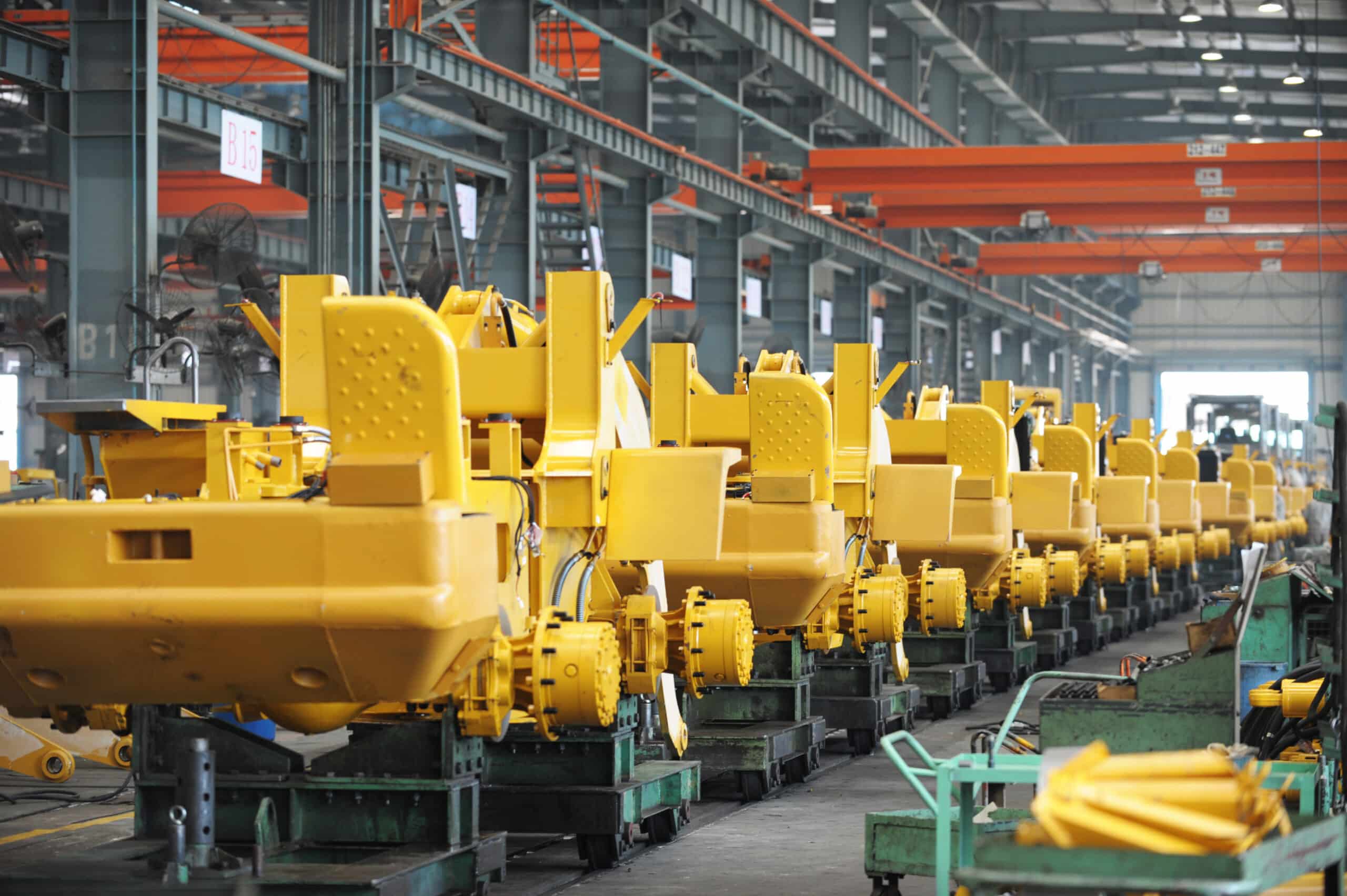
Material handling in manufacturing is undergoing a fundamental shift. As products become heavier, production environments become more complex, and labor and safety pressures intensify, the way materials move through a facility has become a strategic decision rather than a background function.
By 2026 and beyond, the future of material handling will be shaped by four core forces: safety-driven design, practical automation, electrification, and flexible engineering approaches that match real-world applications. Manufacturers that understand and apply these trends will see improved safety and productivity.
Material Handling Is at a Turning Point
Material handling refers to the movement, storage, control, and protection of materials throughout manufacturing and production processes. For decades, many facilities relied on forklifts and cranes to move objects throughout their facility.
Today, those approaches are advancing as manufacturers deal with heavier, higher-value components, tighter production layouts, and higher safety standards. At the same time, labor shortages and an aging workforce have made it more difficult to rely on manual processes.
As a result, material handling equipment is no longer selected based solely on capacity or initial cost. Customers are seeking a consistent, reliable solution that moves heavy loads with ease and minimal downtime, and they increasingly evaluate options based on safety performance, labor utilization, system flexibility, and long-term operating costs.
Safety-Driven Design Is a Defining Trend for 2026
Safety-driven design is one of the most important material handling trends shaping 2026. While training, procedures, and personal protective equipment remain important, manufacturers are increasingly focused on reducing risk through engineering rather than relying only on behavioral controls.
Forklift-related incidents and manual handling injuries continue to be common challenges, particularly in environments that move heavy loads. In response, many manufacturers are adopting forklift alternatives and engineered transporter solutions that reduce uncontrolled movement and operator exposure.
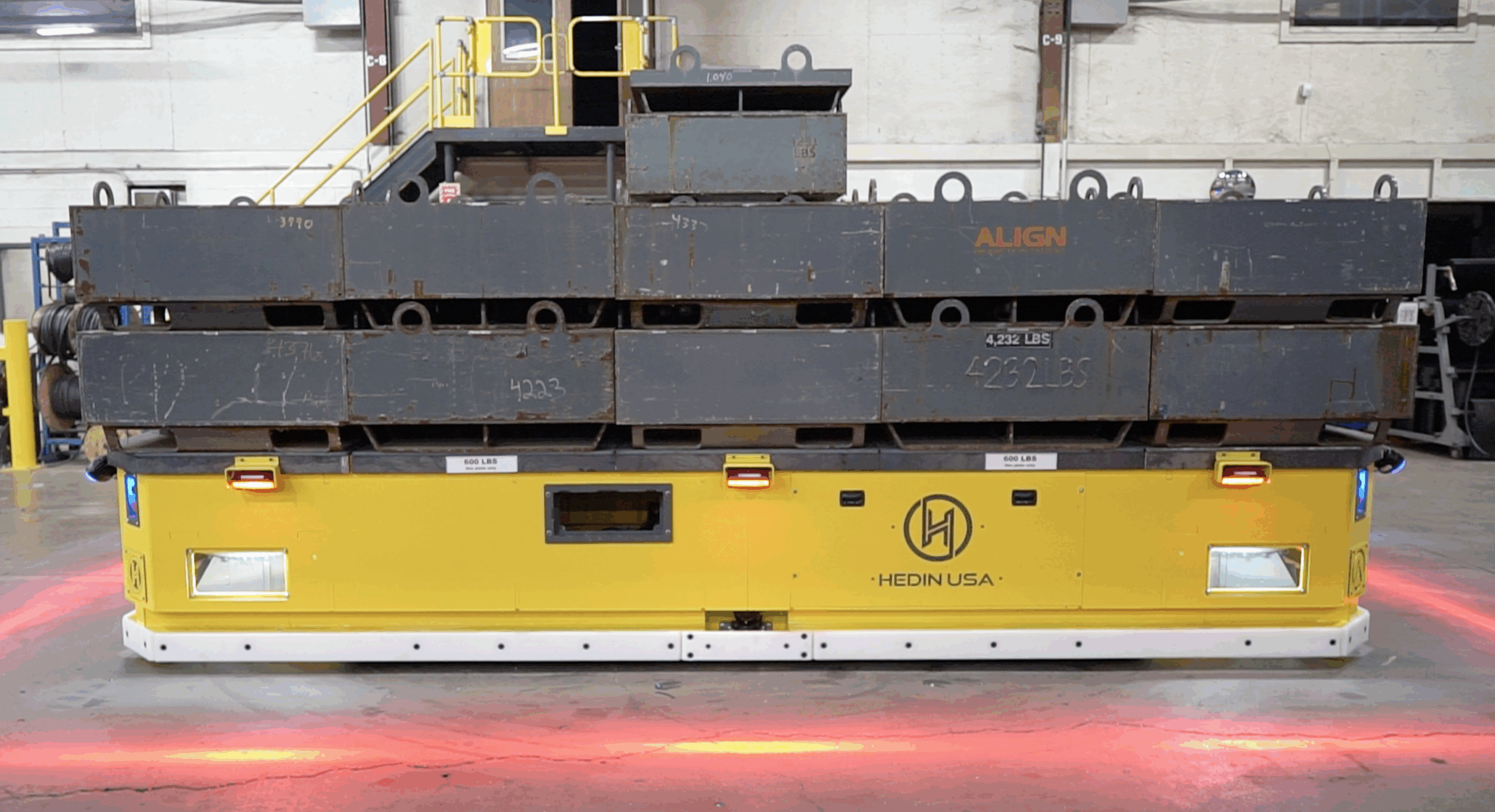
Modern safety-focused material handling systems emphasize predictable travel paths, controlled speeds, improved load stability, and better visibility. Automated Guided Vehicle (AGV) systems help standardize material flow while minimizing opportunities for human error. Safety improvements are achieved by custom-designing safer processes tailored to each manufacturer’s facility and requirements.
Automation Focused on Real Manufacturing Problems
Automation is a central part of the future of material handling, but the approach is becoming more practical and application-driven. Rather than pursuing fully autonomous factories, manufacturers are implementing automation where it delivers clear operational value in certain areas or production lines to start.
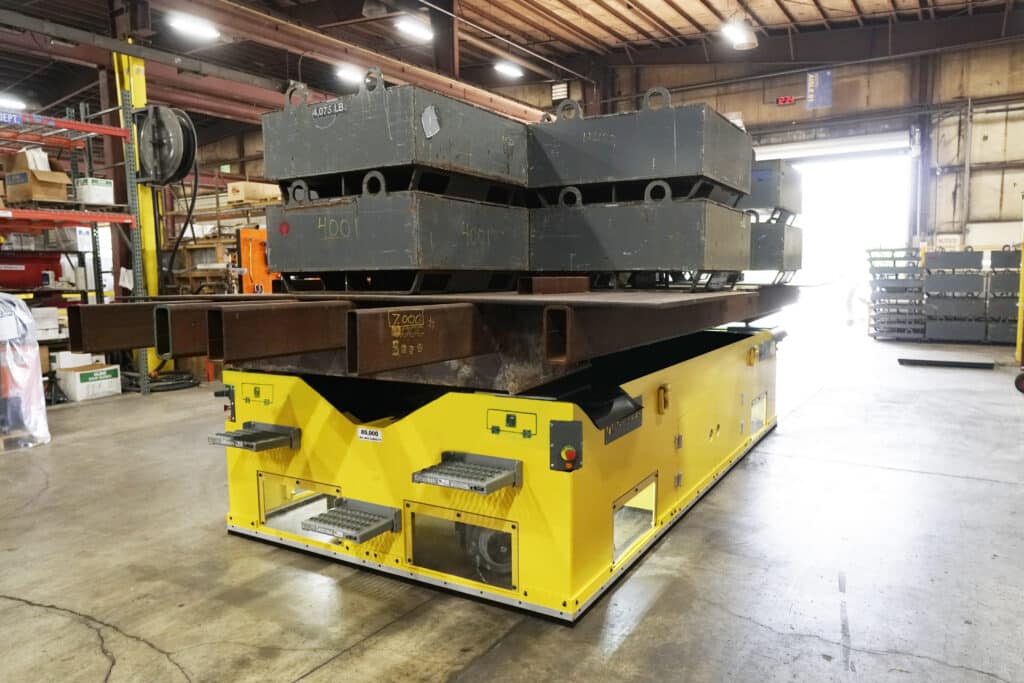
Material handling automation is most commonly applied to repetitive or high-frequency moves, long transport distances within facilities, and tasks involving heavy loads or elevated safety risk. Automated guided vehicles (AGVs) are increasingly used to improve consistent load movement while reducing reliance on manual labor.
Electrification as the Foundation of Modern Material Handling
Battery-powered technology has become a foundation for modern industrial material handling equipment. Electric systems offer a level of precision, control, and reliability that traditional hydraulic or combustion-powered equipment often cannot match.
Advances in battery-powered material handling equipment have expanded the range of applications that can be handled electrically. Today’s electric transporters and power tuggers can easily move extremely heavy industrial loads while delivering consistent performance and consistent operation. Compared to traditional equipment, electric systems typically require less maintenance and integrate more seamlesslywith automation technologies.
As manufacturers plan future material handling upgrades, battery technology enables safer movement, improved control, and long-term flexibility across a wide range of applications.
Standard and Engineered Solutions Both Have a Role
One of the most important shifts shaping the future of material handling is a more balanced approach to equipment selection. Not every application requires a fully custom solution, and not every challenge can be addressed with standard equipment alone. Many material handling needs can be met with standard or custom products, particularly when loads, routes, and processes are consistent and well defined. These solutions offer predictable performance and faster deployment.
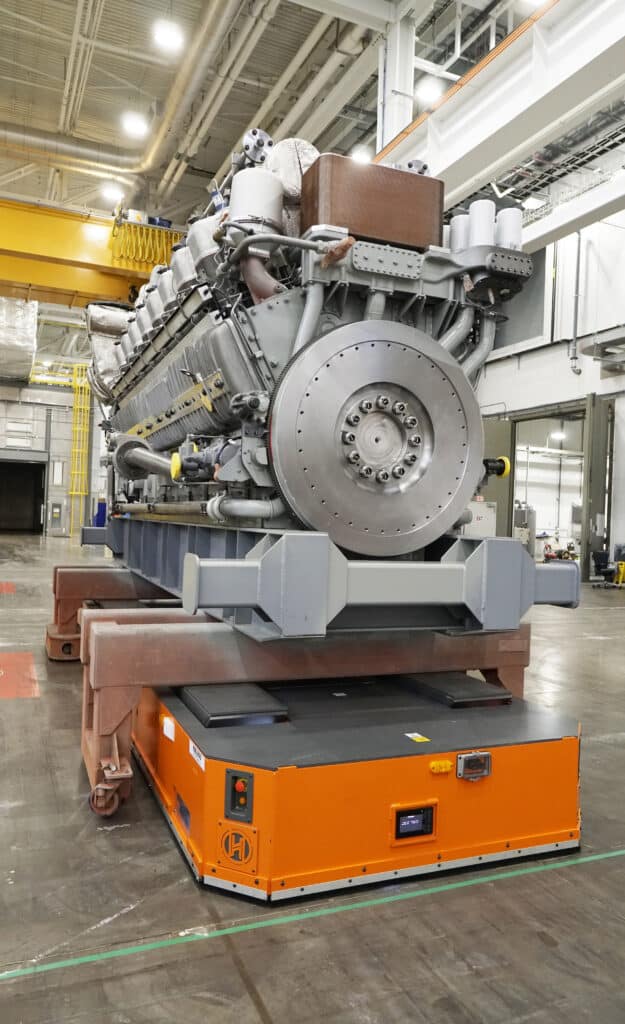
However, complex applications often require additional engineered-to-order solutions. Extremely heavy or oversized loads, unique part shapes, tight space constraints, or integration with existing automation systems may require engineered-to-order solutions. In these cases, engineering ensures the solution fits the process rather than forcing the process to adapt to the equipment.
Manufacturers value partners who can evaluate each application and recommend the appropriate level of engineering based on operational requirements, rather than defaulting to one approach.
Preparing Material Handling Strategies for 2026 and Beyond
As material handling continues to evolve, manufacturers benefit from taking a long-term, strategic view. Equipment decisions made today influence safety outcomes, labor efficiency, and facility flexibility for years to come.
Planning for the future involves identifying where manual handling or traditional forklift use introduces unnecessary risk, where automation could improve consistency, and whether current systems can adapt to future product or volume changes. Aligning material handling strategies with broader operational goals helps ensure investments remain effective as manufacturing needs evolve.


