













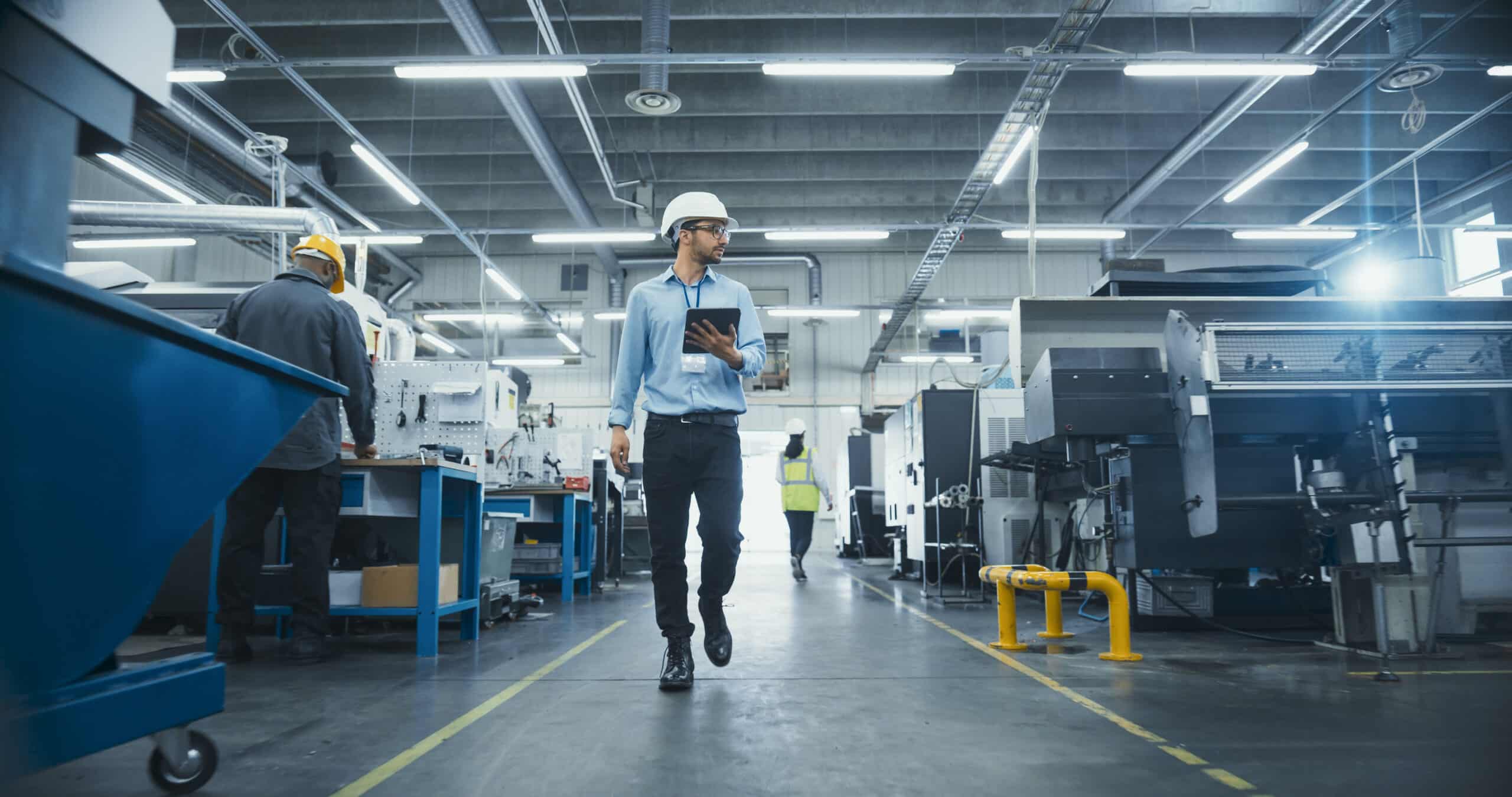
When customers first call us about moving a heavy load throughout their plant, many of them ask for an AGV. In a lot of those conversations, what they actually need is a less costly radio controlled device that their staff would use to control the system.
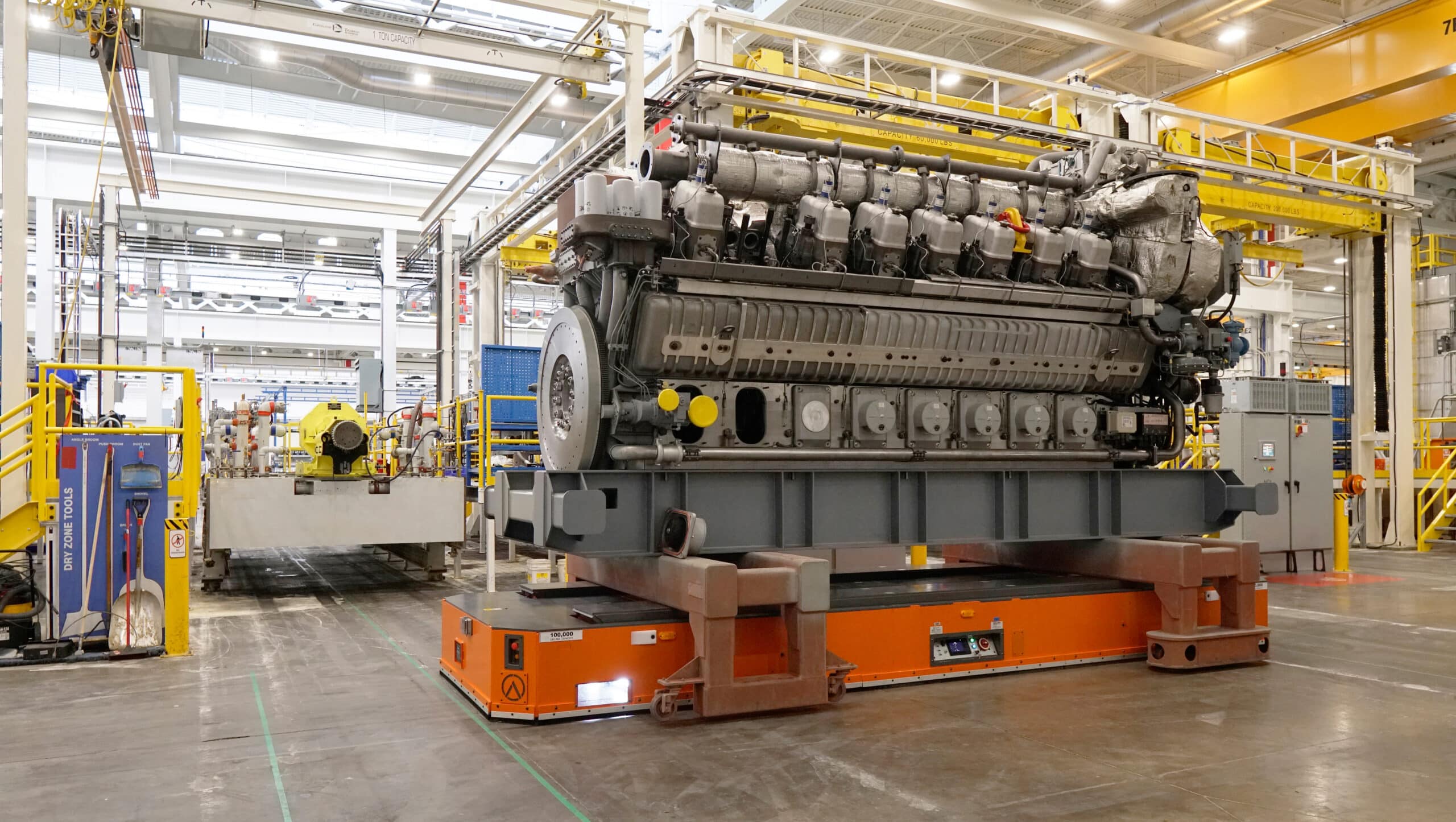
The two terms get used interchangeably, but they describe different things. A transporter is the machine that carries the load. An automated guided vehicle (AGV) is a transporter that navigates and completes its moves on its own, with no operator involved. Most transporters are run by an operator using a radio frequency (RF) remote control, and for many applications that is the better choice.
Choosing between the two comes down to a few questions about how often you move the load, how structured your process is, and what systems your facility already has in place. Here is how our engineers work through those questions with customers.
How Often Do You Move the Load?
Frequency is the first and simplest filter. Many of the customers we talk with move a load just a few times a day. At that rate, an AGV rarely pays for itself. Pulling an operator off the line for five minutes to drive an RF controlled transporter costs far less than automating the move.
We recently visited a manufacturer that moves the nacelle of a wind turbine, which is the large housing that sits on top of the tower and holds the generator. The load is massive, but the move does not happen often enough to justify automation. Their team is comfortable having an operator step away for a few minutes to handle it. The same reasoning applies to pulling a die out of a press for maintenance or relocating a fixture a few times a week.
AGVs earn their place in repetitive, scheduled work. The most common example is delivering material from a warehouse to the assembly line. Another is carrying finished product from the end of a line over to shipping.
How Will the AGV Know It Is Time to Move?
This is one of the biggest differences between operating a transporter manually and automating it. An operator can see that a part is ready and go get it, but an AGV must be told the part is ready. Something in the facility needs to send the vehicle a signal over the wireless network that says a load is ready at point A and should go to point B.
In most plants, that signal comes from a manufacturing execution system (MES). An MES is software that tracks production across the factory and controls when equipment is allowed to operate. For example, an MES might enable a hoist only while a part is being lifted into a fixture, then disable it once the clamps engage so no one can pull the part back out. When a product is finished, that same system can tell an AGV to come pick it up and where to take it.
Align can build that decision logic into the AGV itself, but it usually makes more sense for the customer’s system to direct the vehicle. Consider a truck that delivers several steel coils. The AGV needs to know which storage spot each coil goes to, and the customer’s system is the one that already tracks that information.
If your plant does not yet have an MES, or an automation team that handles PLC programming and maintains your other automated equipment, expect a lot of groundwork before an AGV project can move forward.
How Consistent Is Your Process?
The most successful AGV projects happen in rigid, structured, repetitive environments where there is very little variance from one move to the next.
Go back to the coil example. If a forklift sets each coil on the floor in roughly the same area, but the exact position changes every time, an AGV may struggle to pick it up reliably. Pickup and set down locations need to be predetermined and fixed.
Decision making adds complexity too. One customer wanted the AGV to deliver to point A, but drive on to point B if A was occupied, and then search a third area if both were full. That request turns a vehicle project into a much broader facility logistics system.
How Much Do Your Loads Vary?
Size matters as much as position. If you are moving coils, are they all the same diameter? If you are moving engines or transmissions, do the lengths and widths change from model to model? The AGV has to account for those differences at both pickup and set down. It also needs to know how much space to leave between parts, which might be one foot for one product and three feet for another.
Capacity applies to either control method. Your transporter should be sized for the heaviest load you will ever move, not the typical one. Getting that number right up front saves a costly redesign later.
What Does Automation Add to the Cost?
An AGV costs significantly more than an RF controlled transporter. On a single unit, adding AGV capability can easily double the total investment. That difference reflects the work involved, not a markup on the name. The added cost comes from:
- Safety scanners that detect people and obstacles in the vehicle’s path
- Navigation hardware and the programming logic behind every move
- Wireless infrastructure and integration with your plant systems
- Commissioning, testing, and ongoing service
Maintenance continues after installation as well. As the wheels wear, their circumference shrinks, so each rotation covers less distance. It is the same reason your car travels slightly less per tire rotation on worn tires than on new ones. Over time, that drift has to be measured and corrected so the AGV keeps stopping in the right place.
Planning for Automation Later
If your facility is not ready for an AGV today, an RF controlled transporter is often the right place to start. You can run it manually now and revisit automation once your MES and automation team are in place.
Be realistic about what that future conversion involves. A transporter can be designed with the ability to be converted to an AGV, but conversion is not an overnight change. It may require sending the unit back to our factory for substantial rework, and scanner and navigation technology can change considerably in two years. Align is standardizing its designs to make future upgrades easier, including routing wiring to locations that simplify later hookups. Even so, the best approach is to plan for conversion as a real project rather than a quick add on.
RF Remote Controlled Transporter vs AGV at a Glance
Here is how the two control methods compare across the factors covered above.
| Factor | RF Remote Controlled Transporter | AGV |
|---|---|---|
| Move frequency | A few times a day or less | The same move repeats many times per shift |
| Timing of moves | On demand, such as for maintenance or changeovers | Timed with other equipment such as a PLC, conveyor, press, or MES |
| Pickup and set down | Positions can vary | Locations are fixed and precise |
| Load sizes | Can vary from move to move | Consistent or well defined |
| Plant systems | No MES or automation team required | Requires the systems and staff to support automation |
| Relative cost | Lower investment | Can easily double the total investment on a single unit |
Talk Through Your Application
Every facility is different, and the right answer depends on how your process actually runs day to day. If you are weighing an AGV against a remote controlled transporter, our engineers can walk through your load, your move frequency, and your plant systems with you and recommend the option that makes sense for your operation.
Source: Align Production Systems


